
Learn
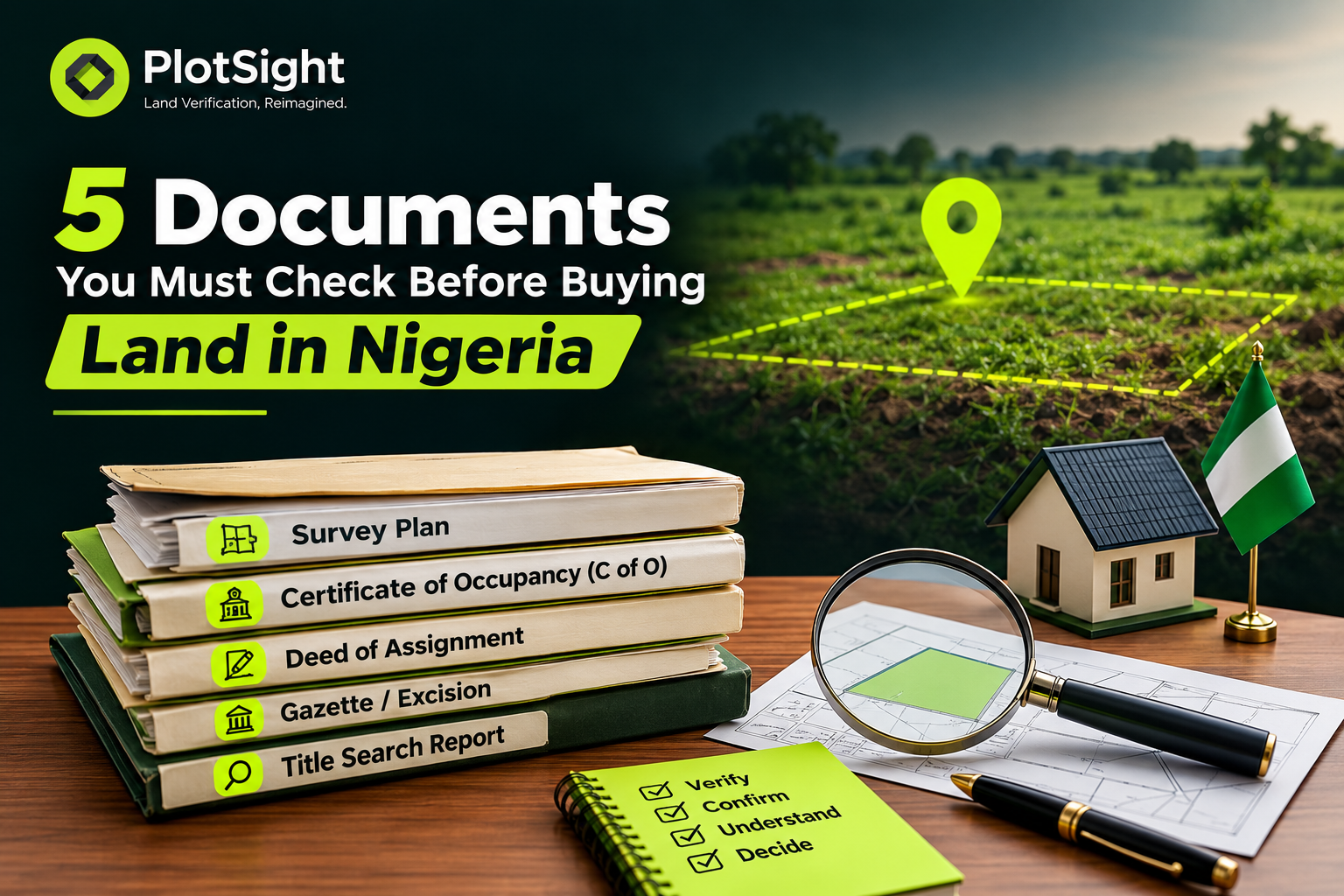
5 Documents You Must Check Before Buying Land in Nigeria
Planning to buy land in Nigeria? Learn the five essential land documents you must verify before making payment to avoid fraud, ownership disputes, and costly mistakes.
Buying land is one of the biggest financial decisions you'll ever make. Whether you're purchasing for personal use, investment, or development, the excitement of securing a property should never replace proper due diligence.
Every year, thousands of Nigerians lose millions of naira because they relied on verbal assurances, recommendations, or incomplete documentation. The reality is that a piece of land may appear genuine while still carrying hidden legal or ownership issues.
The good news? Many of these risks can be avoided by verifying the right documents before making payment.
Here are five essential documents every land buyer should check before committing to a transaction.
1. Survey Plan
A Survey Plan is one of the most important documents in any land transaction. It defines the exact boundaries, size, and location of the property using coordinates prepared by a licensed surveyor.
However, simply receiving a survey plan is not enough.
The survey should be verified to confirm:
- The coordinates match the actual land.
- The land does not fall under government acquisition.
- The survey has not been altered or reused for another property.
- The boundaries correspond with the physical location.
Many buyers assume that having a survey plan automatically means the land is genuine. Unfortunately, that is not always the case.
2. Certificate of Occupancy (C of O)
The Certificate of Occupancy (C of O) is often regarded as the gold standard of land documentation in Nigeria. While it is an important legal document, it should never be the only basis for deciding whether to purchase land.
A C of O confirms that a right of occupancy has been granted over a piece of land. It does not automatically guarantee that the transaction is free from disputes or inconsistencies.
Before relying on a C of O, ensure it is verified to confirm:
- It genuinely belongs to the property being sold.
- The details match the survey information.
- There are no inconsistencies or signs of misrepresentation.
Verification is just as important as possession.
3. Deed of Assignment
The Deed of Assignment records the transfer of ownership from the seller to the buyer.
This document establishes how ownership changed hands and forms an important part of the property's ownership history.
Before proceeding, confirm that:
- The seller has the legal right to transfer ownership.
- The information matches other land documents.
- The property description is accurate.
- All necessary parties have properly executed the document.
A properly prepared Deed of Assignment provides an important legal foundation for your ownership.
4. Gazette or Excision Documents
If you're buying land in areas where communities have obtained government recognition, it's important to verify the Gazette or Excision documents.
These documents indicate whether the government has officially released the land from acquisition, making it available for private ownership.
Failure to verify this can result in purchasing land that is still subject to government acquisition, regardless of what other documents may suggest.
Always confirm:
- The excision has been officially approved.
- The gazette covers the exact location of the property.
- The land falls within the approved boundaries.
5. Title Search Report
Perhaps the most comprehensive step in land due diligence is conducting a Title Search.
A title search goes beyond checking who owns the land. It helps uncover issues that may not be immediately visible from the documents presented by the seller.
A proper title search can reveal:
- Ownership history.
- Existing encumbrances.
- Pending litigation.
- Government acquisition status.
- Third-party claims.
- Restrictions affecting the property.
Skipping this step can expose buyers to significant financial and legal risks.

Why Checking Documents Alone Isn't Enough
One of the biggest misconceptions among land buyers is believing that collecting documents automatically means the land is safe to purchase.
Unfortunately, genuine-looking documents can still be associated with properties that have legal complications, conflicting claims, or location inconsistencies.
That's why verification matters.
Proper land verification involves confirming that every document aligns with official records and accurately represents the property on the ground.
How PlotSight Helps
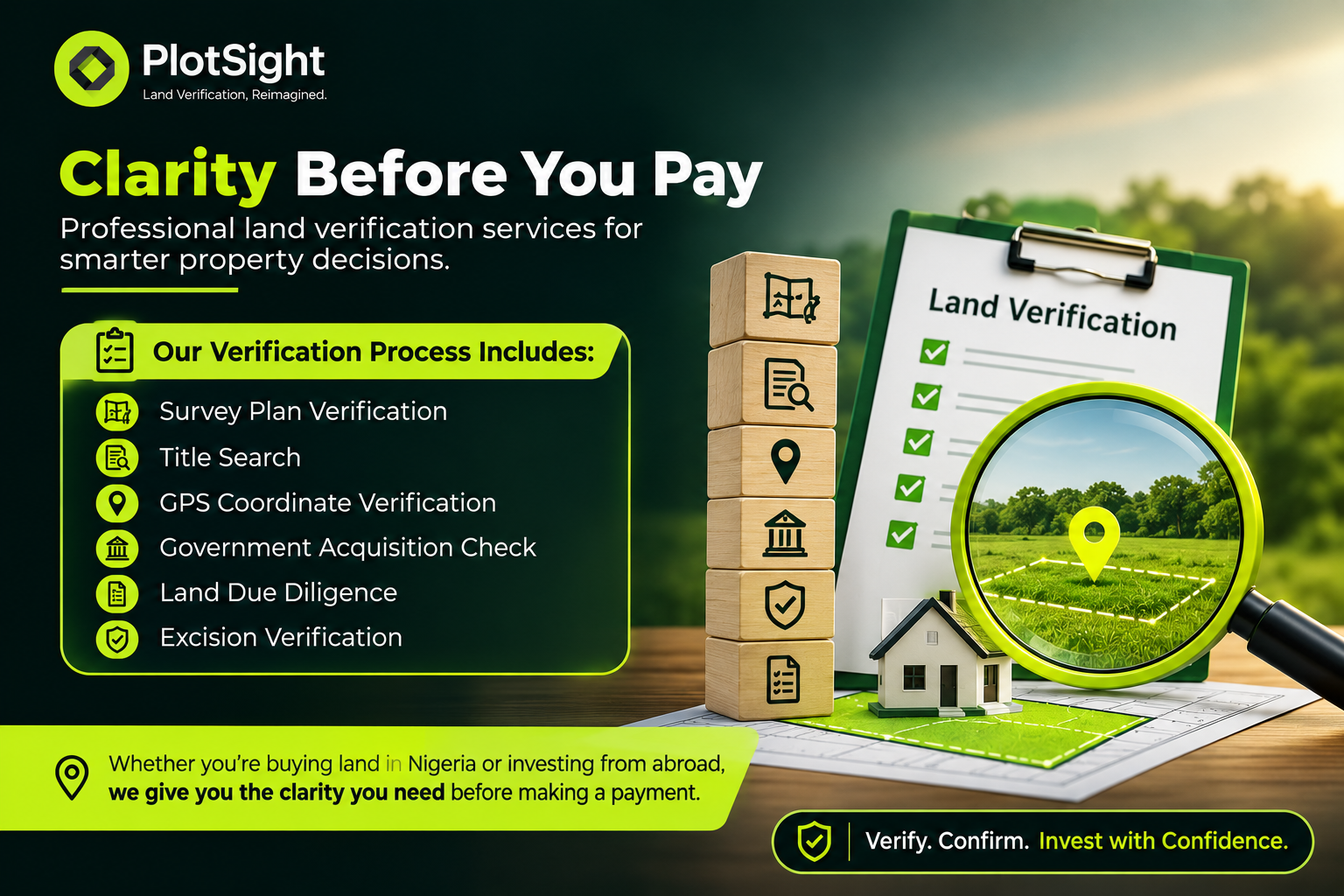
At PlotSight, we help buyers make informed property decisions through professional land verification services.
Our verification process includes:
- Survey Plan Verification
- Title Search
- GPS Coordinate Verification
- Government Acquisition Check
- Land Due Diligence
- Excision Verification
Whether you're buying land in Nigeria or investing from abroad, our goal is to provide the clarity you need before making a payment.
Final Thoughts
Buying land should be an exciting milestone, not the beginning of a costly legal dispute.
Before making a payment, take the time to verify the documents behind the property. A few extra checks today can save you years of financial and legal challenges.
Remember:
Documents provide information. Verification provides confidence.
If you're planning to buy land anywhere in Nigeria, make verification part of your buying process, not an afterthought.
Check a plot before you pay
Use what you learned here on a real survey plan or title search.